Ong Jemal Outcrop
The Neck of the Camel
The Sentinel of the High Range
Beneath the infinite blue of the Tunisian sky, where the salt flats of Chott el-Gharsa meet the encroaching dunes, stands the majestic Ong Jmal.
Rising from the earth like a stone titan, this "Neck of the Camel" is a natural masterpiece that became a silent witness to the rise of the Sith and the roar of the podrace.
🎬 A Dual Stage for the Galaxy
Ong Jmal is not merely a rock; it is a landmark of the imagination. Its jagged silhouette served as a dual stage for the galaxy, transforming the rugged Tunisian geography into the treacherous Mospic High Range and a pivotal, high-speed turn of the Mos Espa Circuit.
- The Arrival of the Shadow: In August 1997, the outcrop became a sanctuary for the Dark Side. Here Darth Maul landed his Infiltrator
- The Path of the Engines: The base provided natural architecture for the "Canyon Dune Turn"
- The Sniper's Vantage: Ridges were occupied by nomadic marksmen during the race
🏙️ The Standing City of the Sands
Just a short journey across the shifting dunes lies Star Wars: Mos Espa, the most extensive standing set in the country.
A Living Set
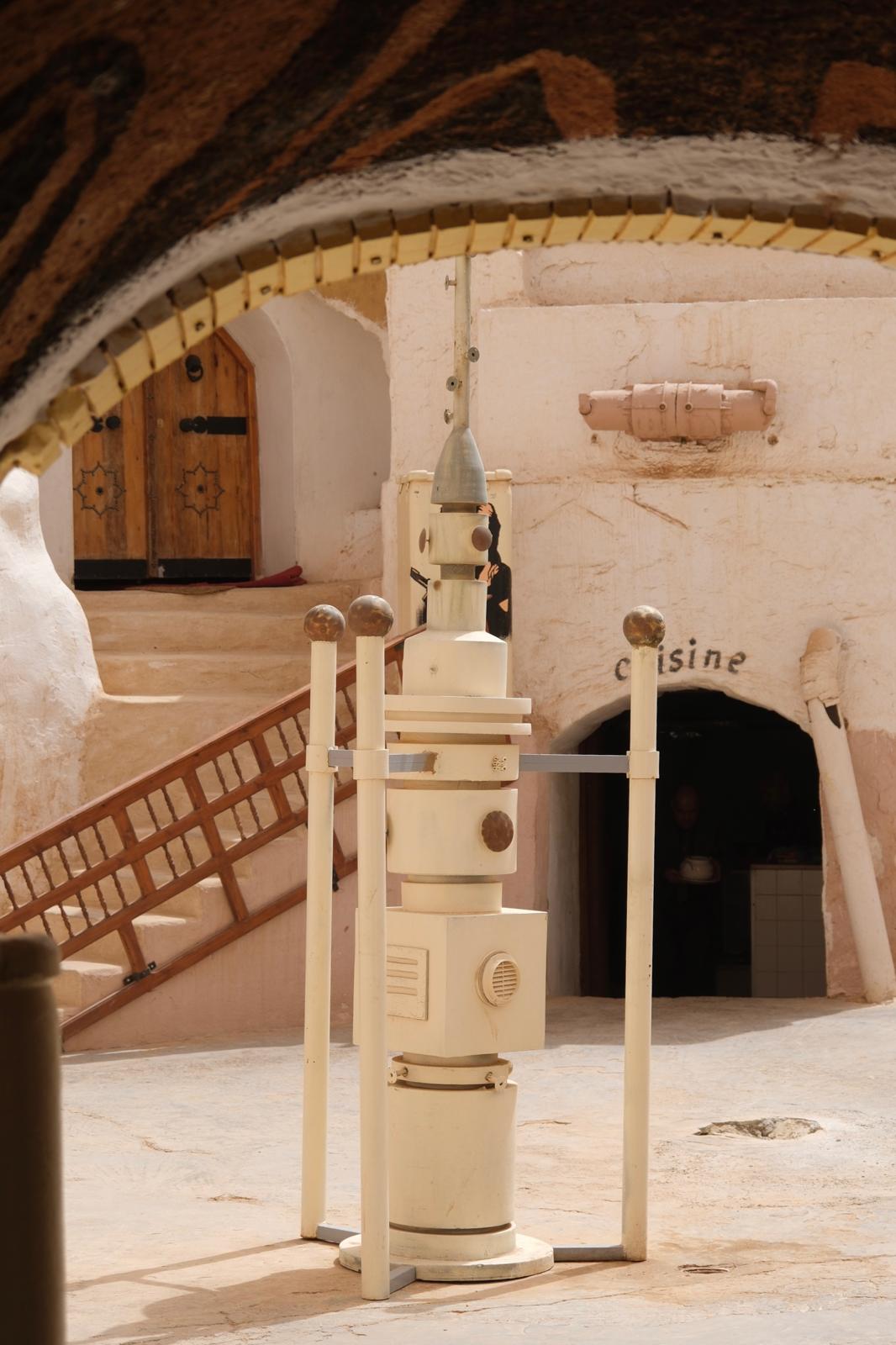
Walk through the moisture vaporators and domed buildings that once housed the spaceport's bustling trade.
The Heart of Tatooine
One of the few places where you can step directly into the architecture of the films, with structures remarkably preserved.
Cinematic Immersion
Offers a visceral connection to the saga, grounding fantasy in authentic dust and stone.
"The view from the summit remains unchanged since cameras stopped rolling. To look out from its peak is to see the horizon exactly as the filmmakers intended—vast, beautiful, and indifferent to the passage of time."
Visual Journey
Visit This Location
Rising from the salt flats, this natural sentinel served as filming location for the Mospic High Range and Canyon Dune Turn. The nearby Mos Espa set remains preserved.